Sunday, 11 December 2011

Brown Hairstreak

Brown Hairstreak Thecla betulae - Whitecross Woods (30/07/2011)

The Brown Hairstreak is an elusive butterfly that I have struggled to photograph for years, that is until this July when at last I struck gold at Whitecross Woods in Oxfordshire. On two previous visits a couple of males had stayed resolutely at the top of a large Ash 'master tree' feeding on aphid honeydew and waiting for females, so I was not feeling very confident. Wandering slowly down one of the flowery rides enjoying the sun, I was surprised to bump into a couple of birding friends whom I had not seen for some time. After catching up on news they told me about a spot where a Brown Hairstreak had apparently been seen earlier that morning. They had spent a fruitless hour searching the area and had just given up. After parting company I hurried down the ride to the place they had described and instantly found a beautiful fresh male nectaring on a Knapweed flower. I couldn't believe my luck! The butterfly was incredibly obliging and at one point I encouraged it to walk on to my finger and so that I could reposition it on a better flower head. After a while it flew into a nearby Salix to rest and I realised guiltily that I should try to tell my friends, and not having their phone numbers hurried off to catch them up, only to find that they had already left. After mating females descend to lay eggs but male Brown Hairstreaks rarely descend to feed so I felt especially privileged to spent so much time with such an obliging and pretty little butterfly. Without doubt one of my wildlife 'moments' of the year!


Brown Hairstreak Thecla betulae - Whitecross Woods (30/07/2011)

Tuesday, 29 November 2011

The First Frost

We woke up on Monday morning to the first frost of the Winter. It didn't turn out to be a hard frost and as the temperature rapidly rose it soon faded away. It seems hard to believe that this time last year there was snow on the ground and the country was in the grip of the big freeze that would last until the end of the year. In complete contrast, with Westerlies dominating, the weather this Autumn has been mild, wet and windy.

Frozen reeds (Western Turville Reservoir)

Sunday, 27 November 2011

There'll be Bluebirds over...

A few days ago I found a copy of Local Life, a free magazine of 'news and views', nestling on top of the day's consignment of junkmail that had been violently forced through my letterbox. Packed with gardening tips, church news and adverts for mobile hairdressers, school fetes (a fete worse than death) and Dog-walking services, the arrival of this exciting magazine is always highly anticipated in our household! As I trod the well worn path to the recycling bin I glanced at the front cover and it stopped me in my tracks. An attractive seasonal scene featured couple of Bluebirds at a bird table feasting on Mealworms, a photograph obviously taken in America. A quick glance at Sibley's Birds of North America confirmed, as I had suspected, that they were female Eastern Bluebirds. Obviously the twit who had chosen the photo had seen the reddish breasts and had thought that they were Robins! Unless of course there are a couple of Bluebirds lurking in a garden in the Tring area! Now that really would be something.....

Thursday, 17 November 2011

Late Butterflies and Dragonflies

The butterfly and dragonfly season just seems to go and on. On Sunday morning with the weather unseasonably warm, and we decided to take a long walk in the Chilterns, the plan being to end up at one of our favourite pubs. It felt more like a spring day and I was not surprised to see a few Red Admirals, a couple of Peacocks and a Brimstone out enjoying the mellow sun. Red Admirals are immigrants from Southern Europe and North Africa but there is now evidence that they are successfully overwintering in Britain. I recently saw a photograph of a Red Admiral resting on a snowdrop, taken in January! I was much more surprised to see a male Common Darter Sympetrum striolatum out and about. The flight period for this familiar little dragonfly is from late June to late October, making this a very late individual. Only a few days ago I came across a Migrant Hawker patrolling a pond in a garden I was working in - another late dragonfly. 
A Red Admiral was out in the late afternoon sun today, probably my latest ever butterfly record and possibly not my last sighting of the year as there are few more mild days to come. It certainly makes the Winter seem shorter!

Common Darter Sympetrum striolatum - male

Common Darter Sympetrum striolatum - female

Monday, 31 October 2011

Murderous Mute Swans

On Saturday morning with a cold North-westerly wind blowing in my face, I whiled away an hour or so on the jetty at Wilstone Reservoir, swapping news with Steve, a birding friend from Tring. We were watching a Water Pipit threading a path through a gaggle of sleeping Shovellers, as it worked it's way busily along the water's edge, when something rather strange caught my eye. For a few seconds I couldn't work out what was happening. A Mute Swan had clambered onto the back off another Swan and was pecking violently at it's neck and head as the half submerged victim swam slowly towards the spit in a desperate bid to escape. This proved to be a bad move as the stricken bird soon became beached in the shallow water and unable to break free, lay prostrate, neck outstretched as it's assailant rained down blows and attempted to hold it's head under water. Several other curious Swans soon gathered at the scene of the crime and I feared that they were going to join in the attempted murder, but instead they became very territorial and set about squabbling with each other. Steve told me that he had witnessed Mute Swans trying to drown each other before and had once seen a man in a rowing boat repeatedly beating a Swan with an oar in a bid to persuade it to release it's victim. We had begun to talk about the possibility of making a strategic rescue bid when the aggressor suddenly seemed to lose interest and stepped off it's bedraggled victim, who waddled unsteadily onto the spit, only to be chased away by another Swan. Many people believe that nature should be allowed to take it's course but I am a confirmed intervener, so I was relieved when the situation resolved itself without our help.

Thursday, 27 October 2011

Eurasian Coot

I took these photos of an oddly marked Coot at Wilstone Reservoir way back in October 2009, so was quite surprised to see the same bird again a few days ago. Coot numbers are building up at the reservoirs, probably encouraged by the low water levels, with at least 1500 at Wilstone recently.

Eurasian Coot Fulica atra - Wilstone Reservoir (18/10/09)

Eurasian Coot Fulica atra - Wilstone Reservoir (18/10/09)

Sunday, 23 October 2011

Red Admiral

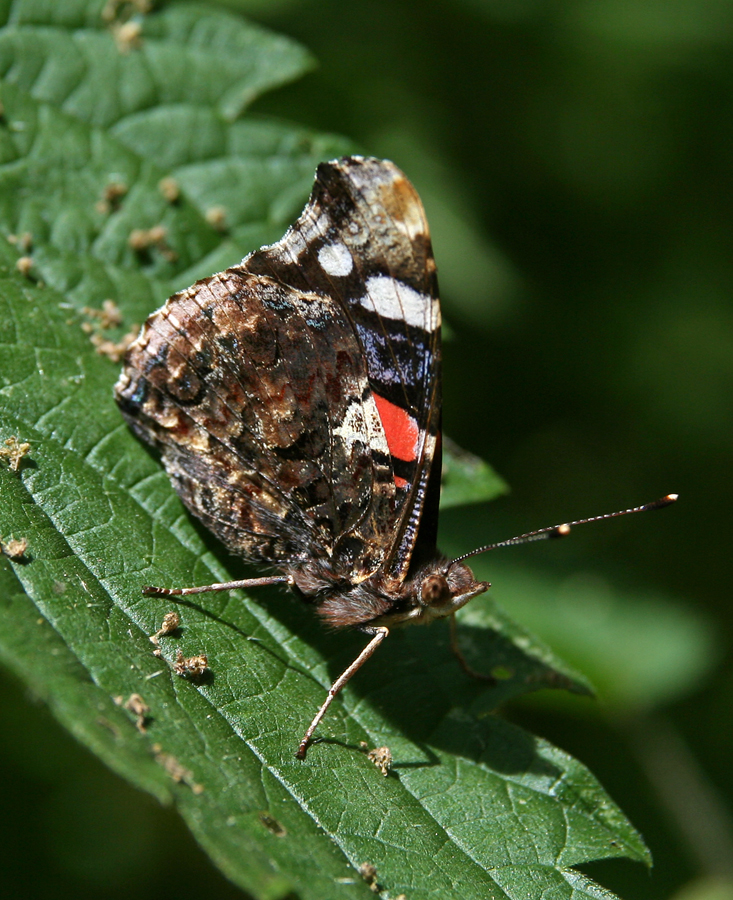
Red Admiral Vanessa atalanta (5/7/2008)

This morning I found a beautiful Red Admiral Vanessa atalanta, basking lazily on a clump of flowering ivy in the mellow late Autumn sun. It has been a good year for these elegant butterflies and there are still plenty on the wing in Gardens and Orchards taking advantage of the mild October weather. Sadly, it looks as if the butterfly year is about to end with the weather forecast to turn cold, windy and wet next week. It will be a long wait until Spring when the first Brimstones are on the wing again!

 Red Admiral Vanessa atalanta (5/7/2008)

Red Admiral Vanessa atalanta (19/7/2006)